
Service Hotline
+86 18101795790
+86 18101795790
Contact:Gensors
Phone:+86 18101795790
TEL:+86 021-67733633
Email:sales@bmbond.com
Address:22, Lane 123 Shenmei Road Pudong New District Shanghai, China
In the "pyramid" of gas turbine development, the pressure scanning valve is a precision measurement tool near its
apex. By providing high-density, high-precision, and synchronized pressure field data, it directly supports core R&D
activities like performance enhancement, safety boundary expansion, and design tool validation. Modern
high-performance, high-reliability gas turbine development would be unimaginable without it.
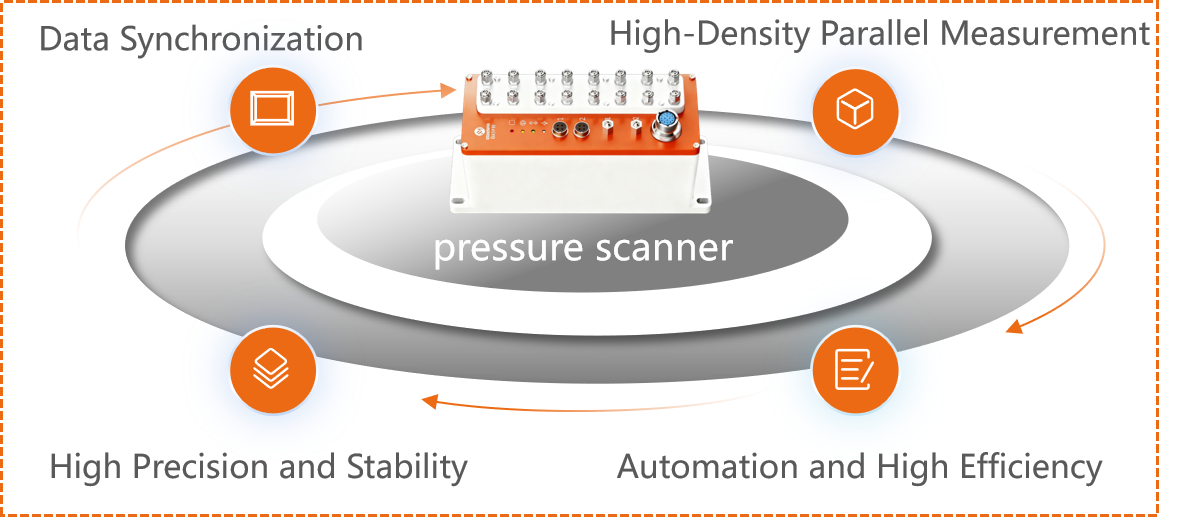
The Pressure Scanning Valve (PSV), also known as an Electronic Scanning Pressure (ESP) system, is a critical,
high-end test instrument that has revolutionized traditional point-by-point measurement, drastically improving
test efficiency and data quality.
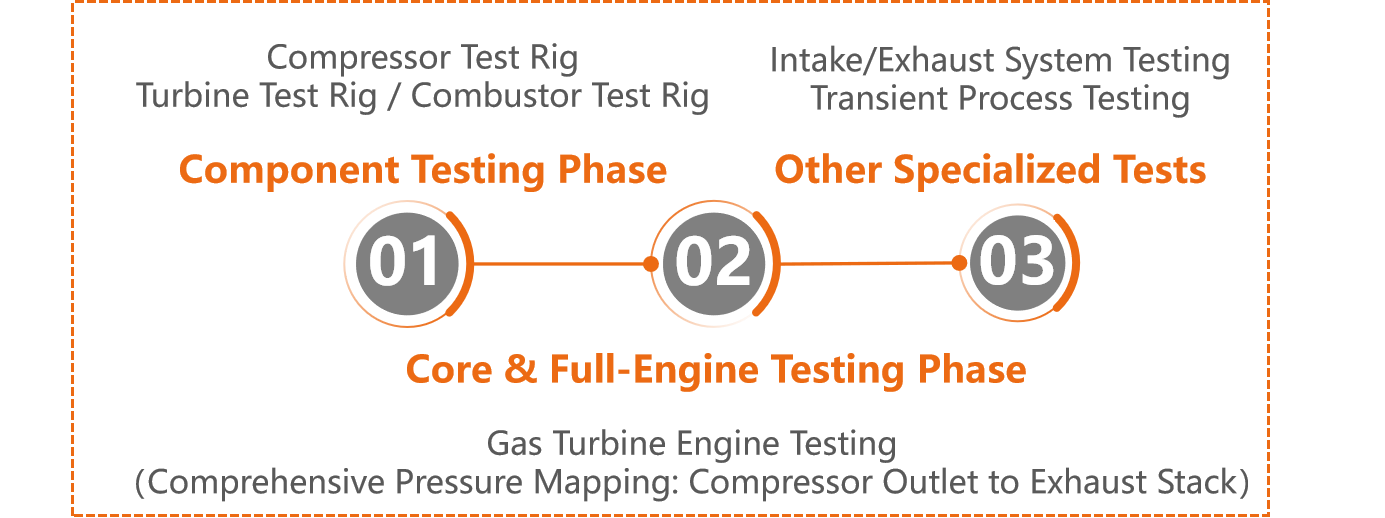
1. Application in Test Phases
PSVs are essential, particularly during detailed performance testing of core components and the whole-engine
validation phase.
Core Component Testing:
Compressor Test Rigs: Measure steady and dynamic pressures before and after rotor and stator stages to map
compressor characteristics (pressure ratio vs. flow, efficiency vs. flow).
Combustor Test Rigs: Measure pressure distribution and pulsations in the combustor head, liner, and exit section
to analyze stability, thermoacoustic oscillations, and outlet temperature field quality.
Turbine Test Rigs: Measure pressure distribution on turbine nozzle and blade surfaces to assess aerodynamic
loading, efficiency, and cooling effectiveness.
Whole-Engine Integration Testing:
Gas Turbine Engine Testing: Perform dense pressure measurements at key locations under real operating conditions
to verify overall performance meets design targets and to study component matching.
PSVs are generally not used in early conceptual design (reliant on simulation) or later durability testing (focused on
long-term structural effects, using more economical sensors).
2. Data Supporting Verification & Results
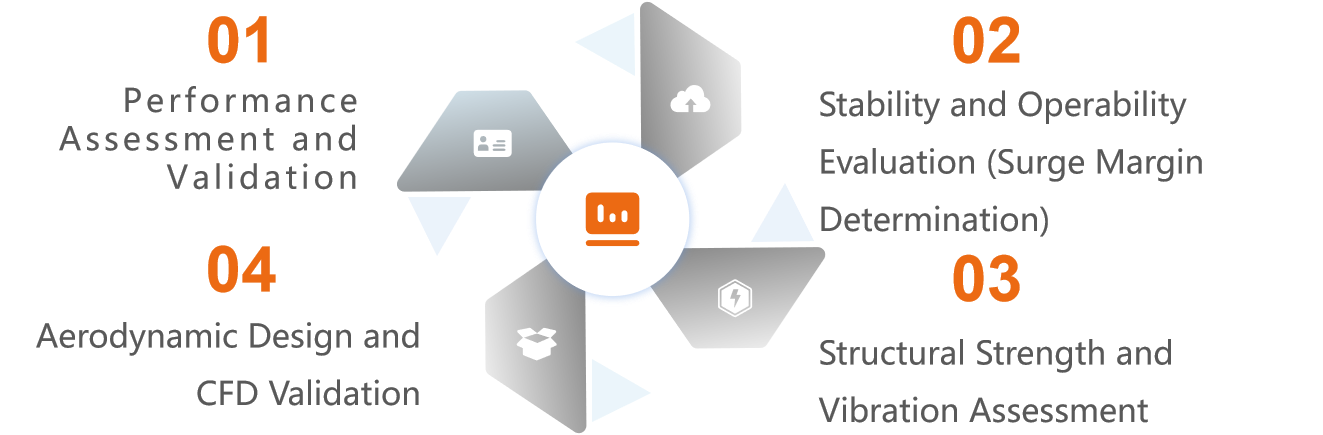
PSV data serves as the "gold standard" for design validation and optimization:
Performance Verification & Optimization:
Efficiency Calculation: Precisely compute isentropic efficiency and total pressure loss coefficients from inlet/outlet
total and static pressures.
Load Distribution: Integrate dense surface pressures to determine aerodynamic loads on blades.
Aerodynamic Stability Assessment (Critical):
Surge/Rotating Stall Boundary Detection: Precisely identify stall inception by monitoring high-frequency pressure
pulsations, defining the safe operating envelope.
Flutter Prediction: Analyze unsteady surface pressures to study aeroelastic issues and prevent catastrophic failures.
Combustion Stability Analysis:
Thermoacoustic Oscillation Monitoring: High-frequency response is key to diagnosing and suppressing damaging
pressure oscillations coupled with heat release.
CFD Model Validation:
High spatial-resolution pressure field data provides the most direct experimental basis for calibrating and improving
computational fluid dynamics models.
3. Implementation Details
Using a PSV is a systematic engineering process:
System Composition: Includes the PSV module (containing multiple silicon piezoresistive sensors sharing a
reference vacuum), a Data Acquisition System, and pressure tubing connecting to probes or surface taps.
Installation & Layout:
The PSV's compact size is crucial in the confined spaces of a gas turbine. Units are mounted on or near the
engine casing to minimize tubing length and maximize frequency response.
They are often housed in cooled protective shells to shield electronics from high ambient temperatures.
Calibration & Measurement:
In-situ Calibration: A known reference pressure is applied before testing to calibrate all channels, eliminating
drift errors.
Synchronous Acquisition: All channels are sampled simultaneously, which is vital for analyzing unsteady phenomena.
Data Components: Measured data contains both steady (for performance) and dynamic (for stability) components,
with frequency responses often reaching tens of kHz.
Data Analysis: Processed data generates pressure contour maps, spectrograms (FFT), and correlation functions for
engineer diagnosis and decision-making.
Summary
In the pyramid of gas turbine development, the pressure scanning valve is an indispensable, high-precision tool. Its
ability to deliver dense, accurate, and synchronized dynamic pressure field data is fundamental to core R&D
activities aimed at boosting performance, expanding safety limits, and validating digital models. The development
of modern, high-performance gas turbines relies heavily on this critical technology.


Copyright © 2009-2025 BM Genuine Sensing Technology (Shanghai)Co.,Ltd. All Rights Reserved.
Phone